Industrial Automation Jobs: Present Demand, Emerging Roles & Future Outlook
Explore high-demand career paths in industrial automation. Discover key job roles, essential Industry 4.0 technical skills, salary outlooks, and future trends.
Modern manufacturing is shifting from simple, pre-programmed mechanical loops to intelligent, interconnected ecosystems. Driven by Industry 4.0, edge computing, and artificial intelligence, the industrial automation sector is expanding rapidly. The global market is projected to surpass $600 billion within the next decade, generating an urgent demand for engineers, programmers, and technicians capable of bridging physical machinery with software systems.
Whether you are an engineering student deciding on a specialization, a maintenance technician looking to upskill, or a software developer exploring operational technology (OT), the industrial automation field offers some of the most resilient, high-paying career trajectories available today.
The Present Landscape: High-Demand Roles Today
Plants and industrial facilities across automotive, semiconductors, pharmaceuticals, and consumer goods require talent to keep automated assembly lines reliable, efficient, and calibrated.
The roles driving current hiring include:
- PLC & SCADA Programmer: Programs, commissions, and troubleshoots Programmable Logic Controllers (such as Siemens S7, Rockwell Allen-Bradley, and Schneider Electric) along with supervisory SCADA/HMI interfaces.
- Control Systems Engineer: Designs electrical schematics, loops, sensor integration, and instrument panels that control industrial processes.
- Robotics Specialist / Programmer: Deploys, calibrates, and programs 6-axis industrial arms (Fanuc, KUKA, ABB) and collaborative robots (cobots) for welding, palletizing, and assembly tasks.
- Automation Maintenance Technician: Focuses on hardware uptime, field diagnostics, pneumatic/hydraulic subsystems, and sensor replacement to minimize factory downtime.
Instrumentation & Drive Engineer: Focuses on precision measurement (temperature, flow, pressure transmitters) and variable frequency drives (VFDs) powering heavy mechanical operations.
The Shift: Future Roles in Smart Manufacturing (Industry 4.0 & Beyond)
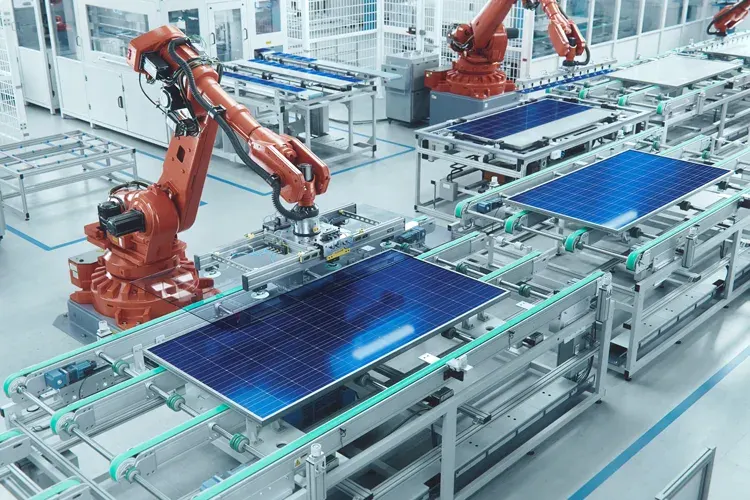
Traditional automation focused heavily on repeating deterministic tasks. Future automation, by contrast, relies on adaptability, data analytics, and autonomous decision-making. As factories convert to "smart factories," the line between IT (Information Technology) and OT (Operational Technology) is vanishing.